

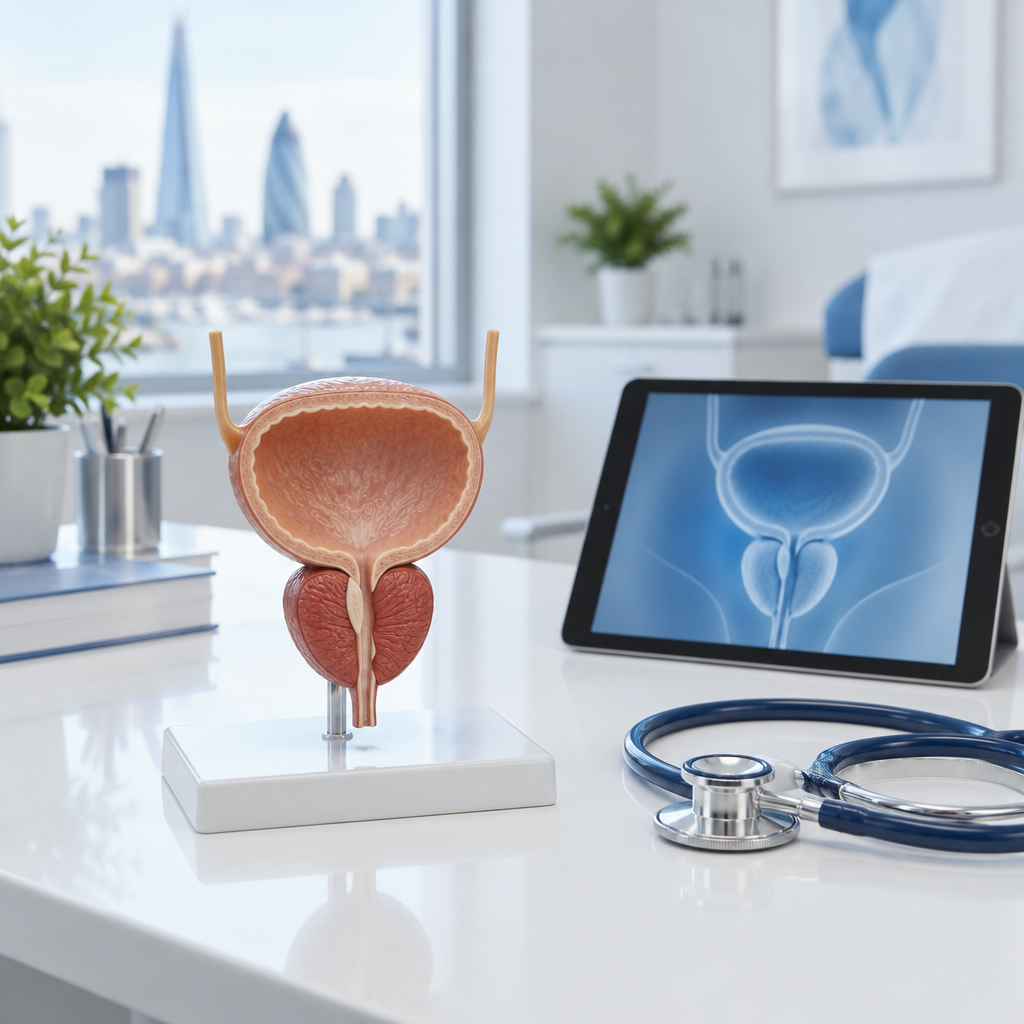
Whether prostate enlargement curable is one of the most common questions men ask after receiving a diagnosis. The honest answer is that it depends on the underlying cause and the individual. Benign prostatic enlargement (BPE), the most prevalent form, is not always “cured” in the traditional sense. However, it can be effectively managed, and in many cases, symptoms can be significantly reduced or resolved with the right treatment.
Mr Sachin Malde is a consultant urologist based on Harley Street in Central London, with specialist expertise in minimally invasive prostate treatments and a broad range of urological conditions. He works with men experiencing benign prostate enlargement to find the most appropriate, evidence-based approach for their individual circumstances.
What Is Prostate Enlargement?
The prostate is a small gland located beneath the bladder that surrounds the urethra. As men age, it is common for the prostate to grow larger, a condition known as benign prostatic enlargement (BPE) or benign prostatic hyperplasia (BPH). This growth is not cancerous, but it can press on the urethra and cause urinary symptoms that affect daily life.
According to NHS guidance on prostate enlargement, the condition is very common in men over 50, though it can occur earlier. It is estimated that around half of men aged 50 to 60 have some degree of prostate enlargement, and up to 90% of men over 80 experience symptoms related to this condition.
Is Prostate Enlargement Curable?
It is crucial to clarify that benign prostate enlargement is a natural, age-related process, which means it cannot always be permanently reversed. However, “not curable” does not mean “untreatable.” Many men achieve excellent symptom control and a significant improvement in quality of life through a combination of lifestyle changes, medication, and, when appropriate, minimally invasive procedures.
In some cases, particularly when a specific, treatable cause is identified, symptoms may resolve entirely. For others, ongoing management is the goal, and that is entirely achievable.
What Factors Influence Whether Prostate Enlargement Can Be Treated Successfully?
Several factors affect how well prostate enlargement responds to treatment:
- The severity of symptoms at the time of diagnosis
- The size of the prostate gland
- Whether urinary flow has been significantly affected
- Overall health and any other medical conditions
- How early treatment is sought
Seeking advice sooner rather than later generally leads to better outcomes and a wider range of treatment options.
What Are the Treatment Options for Prostate Enlargement?
Treatment for prostate enlargement is not one-size-fits-all. Mr Sachin Malde takes a personalised approach, discussing all available options with each patient before recommending a course of action.
Watchful Waiting and Lifestyle Changes
For men with mild symptoms, active monitoring, sometimes called watchful waiting, may be recommended initially. This involves regular check-ups and lifestyle adjustments such as:
- Reducing fluid intake in the evenings
- Limiting caffeine and alcohol
- Practising bladder training techniques
- Maintaining a healthy weight
Studies have shown that these lifestyle changes can have a substantial impact on symptom relief and overall urinary health.
Medication
Several types of medication are commonly used to manage prostate enlargement. Alpha-blockers help relax the muscles around the prostate and bladder neck, improving urine flow. Five-alpha reductase inhibitors can help shrink the prostate over time. Your clinician will discuss which option, or combination, may be most suitable for you.
Minimally Invasive Prostate Treatments
For men whose symptoms do not respond adequately to medication or who prefer to avoid long-term drug use, minimally invasive prostate treatments offer an effective alternative. These procedures aim to reduce the obstruction caused by an enlarged prostate with less risk and a shorter recovery time than traditional surgery. Mr Sachin Malde offers a range of these treatments and can advise on which approach may be most appropriate based on your prostate size, symptoms, and health profile.
When Should You See a Specialist?
It is worth speaking to a urologist if you notice any of the following:
- A weak or interrupted urine stream
- Difficulty starting to urinate
- Frequent urination, particularly at night
- A feeling that the bladder has not fully emptied
- Urgency or leaking before reaching the toilet
If you experience sudden inability to urinate, significant pain, or blood in the urine, seek urgent medical attention promptly.
Can Prostate Enlargement Get Worse Without Treatment?
Left unmanaged, benign prostate enlargement can progress over time. Symptoms may worsen, and in some cases, complications such as urinary retention, bladder stones, or kidney problems can develop. According to the National Institute for Health and Care Excellence (NICE), early assessment and appropriate management can help prevent these outcomes and preserve long-term urinary health.
Taking the Next Step
While prostate enlargement may not always be curable in the strictest sense, effective treatment can make a meaningful difference to your symptoms and quality of life. With the right specialist guidance, most men can manage the condition well and continue living actively and comfortably.
To find out whether treatment for prostate enlargement may be suitable for you, book a consultation with Mr Sachin Malde at his Harley Street practice in Central London. He will carry out a thorough assessment and discuss all available options in a clear, unhurried setting.
Frequently Asked Questions (FAQs)
What are the common symptoms of prostate enlargement?
Common symptoms include frequent urination, especially at night, difficulty starting urination, weak urine flow, and a feeling of incomplete bladder emptying.
Is prostate enlargement a sign of cancer?
No, benign prostatic enlargement is not cancerous, but it can have similar symptoms. Regular check-ups are essential to rule out prostate cancer.
How long does treatment for prostate enlargement take to work?
The timeline for relief varies by treatment type. Medication may take several weeks to show effects, while minimally invasive surgeries can provide immediate symptom relief.
Can lifestyle changes help with prostate enlargement?
Yes, lifestyle adjustments such as diet changes, weight management, and exercise can help alleviate symptoms and improve overall urinary health.
What should I do if I have severe symptoms?
If symptoms become severe or disrupt your daily life, it is crucial to consult a urologist like Mr Sachin Malde for appropriate evaluation and treatment options.