

Aquablation therapy for benign prostate enlargement is one of the most significant advances in minimally invasive urology in recent years. If you have been told you need treatment for an enlarged prostate or are exploring your options, understanding what aquablation involves can help you have a more informed conversation with your specialist. Mr Sachin Malde is a consultant urologist based on Harley Street in Central London, with a specialist interest in minimally invasive prostate treatments and robotic-assisted surgery. He works with patients experiencing a range of urological conditions, including benign prostate enlargement (BPE), and offers access to advanced treatment options tailored to individual circumstances.
What Is Aquablation Therapy?
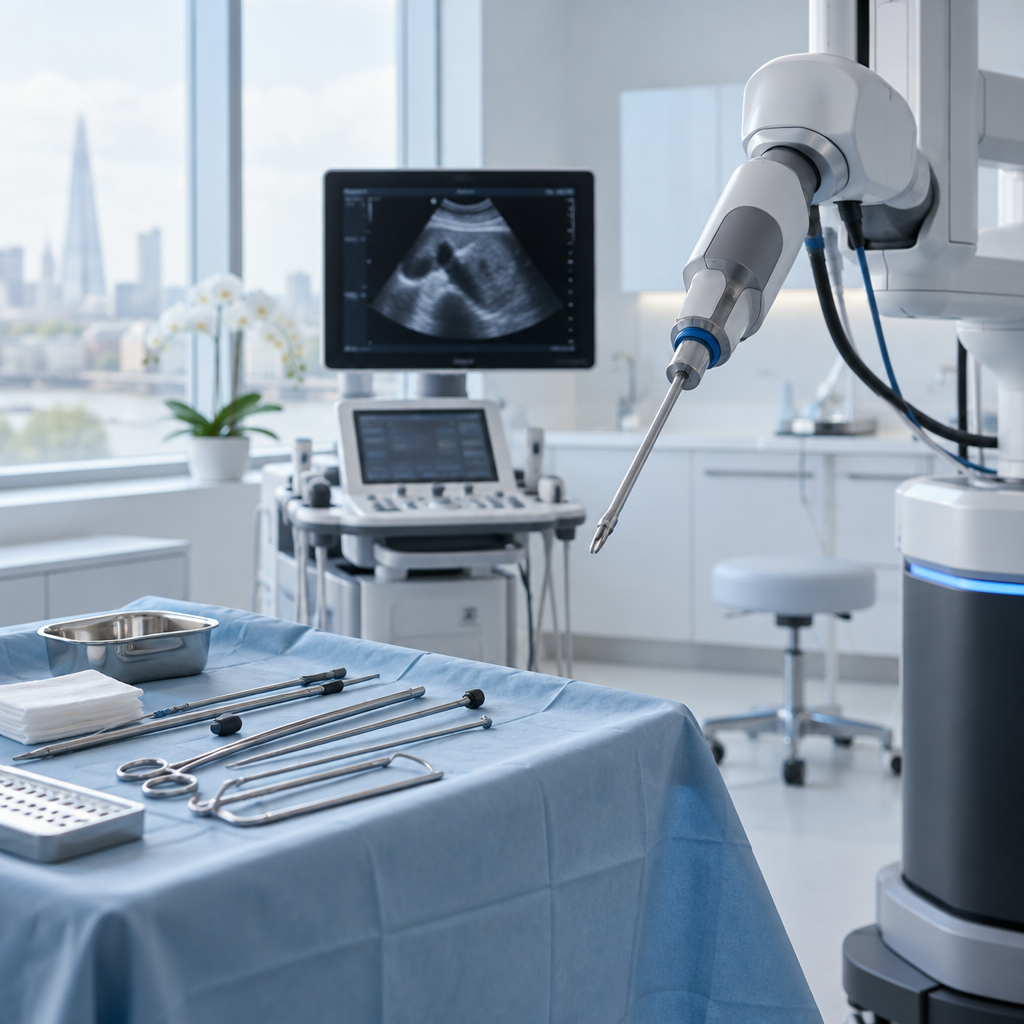
Aquablation is a surgical treatment for the prostate that uses a high-velocity, heat-free waterjet guided by real-time ultrasound imaging and robotic precision. Unlike some traditional procedures, it does not use heat to remove prostate tissue, which may reduce the risk of certain side effects.
The procedure is primarily used to treat benign prostate hyperplasia (BPH), also known as benign prostate enlargement, a non-cancerous condition in which the prostate grows larger and causes urinary symptoms. According to the NHS, approximately 50% of men over the age of 50 experience symptoms related to BPH, and this prevalence increases with age. While aquablation therapy is not a treatment for prostate cancer itself, patients with a history of prostate cancer may still be affected by BPH and should discuss their full history with their specialist.
How Does Aquablation Therapy Work?
The procedure is performed under general or spinal anaesthesia. A cystoscope is inserted through the urethra, and ultrasound imaging is used to map the prostate in detail. The surgeon then programmes the robotic system to remove the precise area of tissue causing the obstruction, and a high-pressure waterjet carries out the removal automatically.
Because the procedure is image-guided and robotically controlled, it can be highly consistent regardless of prostate size or shape. According to NICE guidance on aquablation for lower urinary tract symptoms, the procedure shows promising outcomes for symptom relief with an acceptable safety profile. Studies indicate that over 80% of patients report significant improvement in their urinary symptoms following aquablation therapy.
What Are the Potential Benefits of Aquablation Therapy for Prostate Patients?
Aquablation therapy for prostate conditions may offer several advantages compared with some conventional surgical approaches. These can include:
Preservation of sexual function, including ejaculatory function, in many patients
Consistent tissue removal guided by imaging rather than manual technique alone
Suitability for a range of prostate sizes, including larger glands
A relatively short hospital stay
Reduced reliance on heat energy, which may lower the risk of certain thermal side effects
It is important to note that outcomes vary between individuals. Your clinician will discuss what you can realistically expect based on your specific anatomy, symptoms, and medical history.
Is Aquablation Therapy Right for You?
Who Might Be a Suitable Candidate?
Aquablation therapy for prostate enlargement may be considered for men who have moderate to severe lower urinary tract symptoms caused by BPH and who have not responded adequately to medication. It may also be an option for those who wish to minimise the risk of sexual side effects associated with some other surgical treatments.
Suitability depends on a number of factors, including prostate size, overall health, and any previous prostate treatments. A thorough assessment is always required before any recommendation is made.
What Should You Discuss With Your Specialist?
Before deciding on any prostate treatment, it is helpful to ask your urologist about the full range of options available to you. Questions worth raising include:
Whether aquablation therapy is appropriate given your prostate size and symptoms
What the recovery period is likely to involve
How aquablation compares with other minimally invasive prostate treatments in your case
What follow-up care will be needed after the procedure
What Is Recovery Like After Aquablation Therapy?
Most patients require a short hospital stay following aquablation therapy for prostate treatment. A urinary catheter is typically used for a brief period after the procedure while the urethra heals. Some patients experience temporary urinary symptoms such as urgency or frequency in the initial weeks, which generally improve over time.
Full recovery and the extent of symptom improvement can vary. Your clinician will provide personalised guidance on what to expect and when to seek advice if anything concerns you during recovery. According to NICE, most patients see a significant reduction in urinary symptoms within the first three months post-procedure.
Taking the Next Step
Aquablation therapy for prostate conditions represents a meaningful development in the management of benign prostate enlargement, offering a precise, image-guided approach that may suit a wide range of patients. As with any procedure, the right choice depends entirely on your individual circumstances.
To find out whether aquablation therapy may be suitable for you, book a consultation with Mr Sachin Malde at his Harley Street practice in Central London. Mr Malde offers specialist assessment for benign prostate enlargement and a range of minimally invasive prostate treatments, and will take the time to discuss all appropriate options with you. Contact the practice to arrange your appointment.
Frequently Asked Questions (FAQs)
What is aquablation therapy?
Aquablation therapy is a minimally invasive procedure that uses a high-velocity waterjet to remove prostate tissue, guided by real-time ultrasound imaging.
Is aquablation therapy safe?
Yes, aquablation therapy has been shown to have a good safety profile, with low rates of complications as per NICE guidelines.
How long does recovery take after aquablation therapy?
Most patients experience a short recovery period, typically returning to normal activities within one to two weeks, although full recovery may take longer.
Will aquablation therapy affect my sexual function?
Aquablation therapy is designed to preserve sexual function, with many patients maintaining ejaculatory function post-procedure.
How can I find out if I am a suitable candidate for aquablation therapy?
The best way to determine if aquablation therapy is suitable for you is to consult with a qualified urologist, who can assess your specific condition and needs.